VS

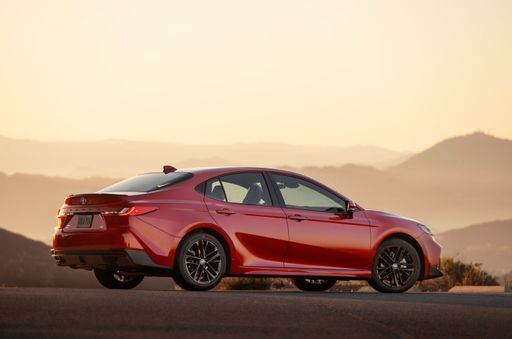
Hyundai Santa Cruz vs Toyota Camry - Differences and prices compared

Compare performance (281 HP vs 232 HP), trunk space and price (28,800 $ vs 28,700 $ ) at a glance. See which model fits your needs and budget better – Hyundai Santa Cruz or Toyota Camry?

Hyundai Santa Cruz vs Toyota Camry: Key differences

Hyundai Santa Cruz

  • slightly more power

Toyota Camry

  • barely cheaper
  • substantially more efficient
  • marginally lighter
Santa Cruz

Two very different answers to the same question

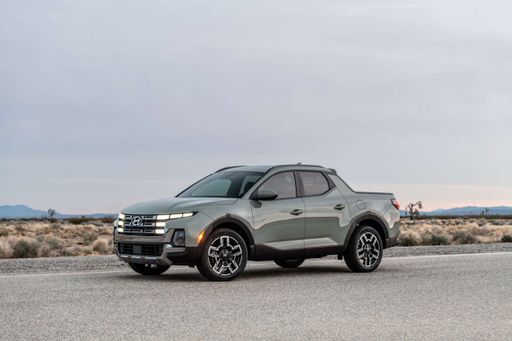
On one side there's the Hyundai Santa Cruz, a pickup-crossbreed that flirts with utility without screaming "work truck." Opposite it sits the Toyota Camry, the calm, well-drilled sedan that has long appealed to people who prefer predictability over theatrics. This duel is less about raw categories and more about two ways of solving day-to-day life on four wheels.

Camry

Character clash: rugged cheek vs. polite competence

The Santa Cruz carries an attitude — a bit scrappy, a bit playful, designed to make weekend gear handling feel purposeful rather than chore-like. The Camry prefers understatement: composed lines, quiet delivery, and a confidence that comes from being comfortably competent. One announces that you're ready for action; the other reassures you that nothing will go wrong on the commute.

How they live in real life

In urban routines the Santa Cruz feels buttoned-up but ready to haul a surfboard or IKEA run, with a higher stance and a utility-focused mindset that tolerates adventure. The Camry lives for long stretches of calm mileage, folding into tight parking spots and smoothing out highway miles with a cabin that aims to be an escape. For families or those with regular cargo needs the Santa Cruz's flexibility is its headline, while the Camry sells peace of mind and a quietly useful package.

Choosing one says something about you

Opting for the Santa Cruz signals a taste for practicality that doesn't want to sacrifice personality — you like your car to work as hard as you play, and to look like it can. Picking the Camry says you favor restraint; you appreciate a predictable, civil companion that keeps daily friction low and ownership headache-free. Both choices are defensible personal statements rather than objective endorsements.

If what matters to you is weekend utility and a dash of personality, consider the Hyundai Santa Cruz

If what matters to you is hauling gear without upgrading to a full-size truck and doing so with a vehicle that visually stands out, the Santa Cruz maps neatly to that brief. It suits someone who values a practical work/play balance and enjoys a vehicle that doubles as personal expression. For drivers who need adaptability and a touch of ruggedness, it’s an honest, likable option.

If what matters to you is low-fuss ownership and a serene daily commute, consider the Toyota Camry

If what matters to you is arriving relaxed after the daily grind, expecting dependable performance and a cabin that keeps life simple, the Camry is tuned for that crowd. It’s aimed at buyers who prize predictability, comfort, and a strong sense of grown-up pragmatism without drawing attention. Read on into the numbers below to see how those personalities translate into the specifics that might tip your decision.

Here’s where it gets real: The technical differences in detail

Santa Cruz

Costs and Efficiency:

Looking at overall running costs, both models reveal some interesting differences in everyday economy.

Toyota Camry is barely cheaper – starting at 28,700 $ , while the Hyundai Santa Cruz costs 28,800 $ . That’s a price difference of around 50 $.

When it comes to city fuel economy, the Toyota Camry performs substantially better – achieving 53 mpg, compared to 22 mpg for the Hyundai Santa Cruz. That’s a difference of about 31 mpg.

Camry

Engine and Performance:

Power, torque and acceleration say a lot about how a car feels on the road. This is where you see which model delivers more driving dynamics.

When it comes to engine power, the Hyundai Santa Cruz offers slightly more power – delivering 281 HP compared to 232 HP. That’s roughly 49 HP more horsepower.

There’s also a difference in torque: the Hyundai Santa Cruz delivers significantly more torque with 311 lb-ft compared to 163 lb-ft. That’s about 148 lb-ft more.

Space and Everyday Use:

Cabin size, boot volume and payload all play a role in everyday practicality. Here, comfort and flexibility make the difference.

Both vehicles offer seating for 5 people.

In terms of curb weight, Toyota Camry is marginally lighter – 3,450 lbs compared to 3,779 lbs. The difference is around 329 lbs.

Who wins the race in the data check?

The Toyota Camry holds a narrow overall lead in the objective data comparison.
This result only shows which model scores more points on paper – not which of the two cars feels right for you.

from $28,700
Camry

Toyota Camry

  • Engine Type : Hybrid
  • Transmission : Automatic
  • Drive Type : Front Wheel, All Wheel
  • Power HP : 208 - 232 HP
Hyundai Santa Cruz
Toyota Camry

Costs and Consumption

View detailed analysis

Engine and Performance

View detailed analysis

Dimensions and Body

View detailed analysis

General

View detailed analysis

Hyundai Santa Cruz

The Hyundai Santa Cruz is a city-friendly pickup with SUV manners, serving up a smooth ride and a surprisingly upscale cabin while still handling weekend projects without the drama. It doesn’t try to out-macho the big rigs; instead it wins with smart packaging, easy parking, and just enough adventure vibe to make every grocery run feel like a mini road trip.

details

Toyota Camry

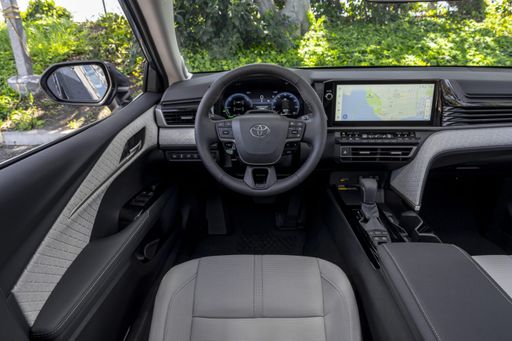
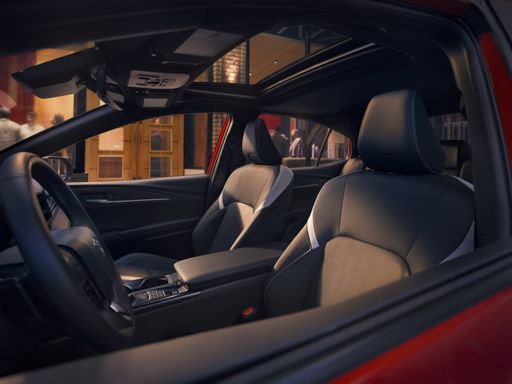
The Toyota Camry is the family-sedan no-brainer that’s grown a personality, blending calm, near‑lux comfort with just enough chassis sparkle to keep your coffee in the cup and a smile on your face. Backed by rock‑solid reliability, easy ownership costs, and a roomy, quiet cabin, it’s the safe choice that doesn’t feel like settling.

details
Hyundai Santa Cruz
Toyota Camry

Costs and Consumption

Price
28,800 - 42,800 $
Price
28,700 - 36,400 $
FuelEconomy City
18 - 22 mpg
FuelEconomy City
44 - 53 mpg
FuelEconomy Hwy
26 - 30 MPG
FuelEconomy Hwy
43 - 53 MPG
Electric Range
-
Electric Range
-
Battery Capacity
-
Battery Capacity
-
Fuel tank capacity
17.7 gal
Fuel tank capacity
13 - 13.2 gal

Dimensions and Body

Body Type
Pickup
Body Type
Sedan
Seats
5
Seats
5
Doors
-
Doors
-
Curb weight
3,779 - 4,295 lbs
Curb weight
3,450 - 3,682 lbs
Trunk Volume
-
Trunk Volume
15.1 cu. ft.
Length
195.9 in.
Length
192.1 - 193.5 in.
Width
75 in.
Width
72.4 in.
Height
66 in.
Height
56 in.

Engine and Performance

Engine Type
Gasoline
Engine Type
Hybrid
Transmission
Automatic
Transmission
Automatic
Drive Type
Front Wheel, All Wheel
Drive Type
Front Wheel, All Wheel
Power HP
191 - 281 HP
Power HP
208 - 232 HP
Torque
181 - 311 lb-ft
Torque
163 lb-ft
Number of Cylinders
-
Number of Cylinders
-
Engine Displacement
2.5 L
Engine Displacement
2.5 L
Gears
-
Gears
-

General

Model Year
2,025
Model Year
2,024 - 2,025
Brand
Hyundai
Brand
Toyota
DriveDuel uses data analysis and artificial intelligence to evaluate vehicle data and create content. Content is regularly reviewed and improved. Prices shown are manufacturer suggested retail prices (MSRP). Taxes, registration fees and dealer charges are not included.