Ford Ranger SuperCrew, starting at 32,800 $

The Ford Ranger SuperCrew impresses with 405 HP and an attractive starting price of 32,800 $ . Here are all the details at a glance.

from $32,800
Ranger

Ford Ranger

  • Engine Type : Gasoline
  • Transmission : Automatic
  • Drive Type : Rear Wheel, All Wheel
  • Power HP : 270 - 405 HP

Big Energy, Mid-Size Footprint

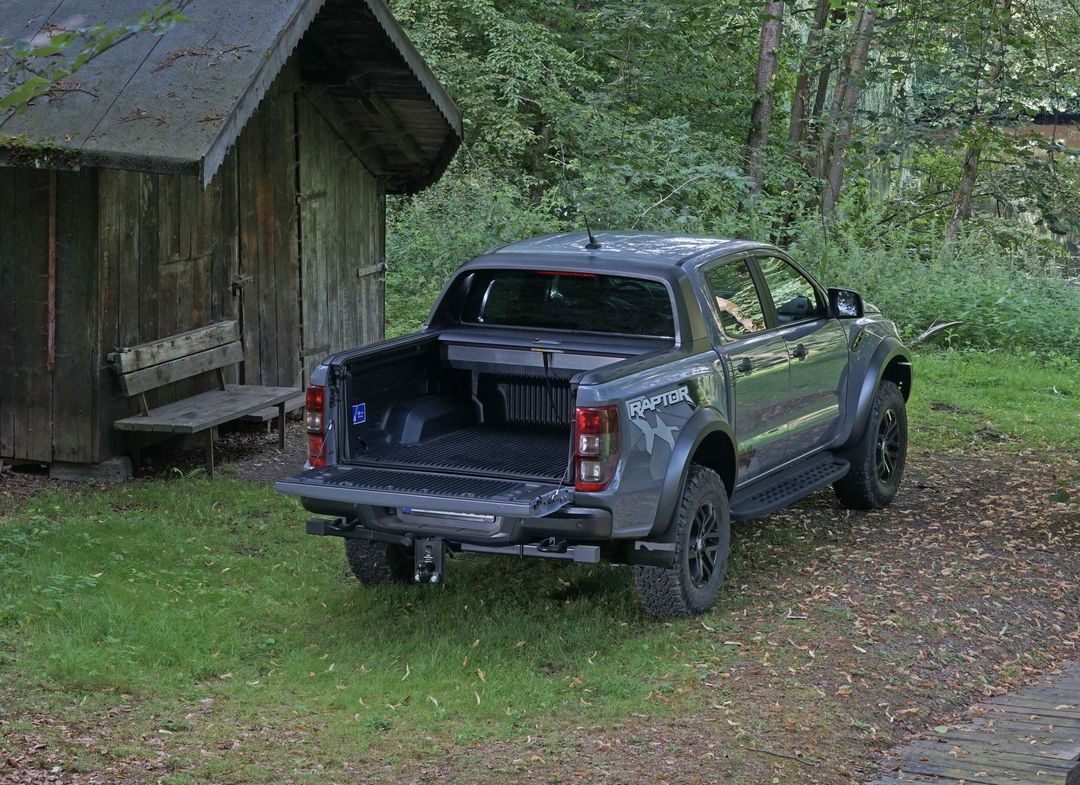
The latest Ford Ranger looks like a scaled-down F-150 that spent extra time in the gym, with squared-off shoulders, C-clamp LEDs, and a grille that says job site without scaring the cul-de-sac. At about 210.6 inches long and 79 inches wide, it still fits most garages while delivering a planted, wide-track stance. The Raptor goes full desert runner with flared fenders, big skid plates, and 33-inch all-terrains that turn grocery runs into a small event. It’s tough-looking without being cartoonish, and the proportions feel right for a modern midsize truck.

Cabin Built for Workdays and Weekends

Inside, the Ranger mixes straightforward ergonomics with a dash of tech, offering an upright driving position, supportive seats, and materials that feel durable first and upscale second. A 10.1-inch touchscreen is standard, with a crisp 12-inch vertical unit available, and both bring wireless Apple CarPlay/Android Auto and clear menus. Handy touches include large knobs that work with gloves, a deep center bin, and a wireless charging pad on higher trims. Road noise is well contained for the class, making long commutes less tiring.

Bed Sense and Everyday Smarts

The 5-foot bed is sized for weekend projects and adventure gear, with sturdy tie-downs and useful lighting that makes late-night unloads less of a guess. Corner bumper steps make clambering in easy, and the tailgate is light to lift yet solid when you lean on it. Inside the SuperCrew, the back seat is adult-friendly for two and acceptable for three on shorter trips, while the bench flips up to reveal hidden storage. It’s a truck that handles the mulch run on Saturday and the school run on Monday without drama.

On-Road Calm, Off-Road Grit

Most Rangers use a 2.3-liter turbo four making 270 hp and 310 lb-ft, paired to a 10-speed automatic that shifts quietly and keeps the engine in its sweet spot. Ride comfort is composed for a body-on-frame pickup, and steering is light enough for tight parking lots but steady on the highway. With 4WD and a rear locker, traction is confident on rutted trails and snowy mornings, and the full-time 4A mode on some trims adds set-and-forget traction. The Raptor transforms character with long-travel suspension and FOX Live Valve shocks, handling rough terrain at speed yet remaining surprisingly civilized on pavement.

Power, Towing, and the Raptor Twist

The four-cylinder’s torque makes city driving easy and freeway merges brisk, with real-world 0–60 mph runs landing in the mid-6-second range depending on spec. Non-Raptor models are rated to tow up to 7,500 pounds and haul roughly 1,700 pounds of payload, which covers a compact camper or a loaded landscaping trailer. The Raptor’s 3.0-liter twin-turbo V6 brings 405 hp and 430 lb-ft and mid-5-second sprints, but its tow rating drops to about 5,500 pounds given the off-road hardware. In everyday use, that means the standard truck is the do-it-all workhorse, while the Raptor is the fun-first specialist that still handles weekend duties.

Fuel Stops and Real-World Range

Two-wheel-drive trucks post up to 21 mpg city and 25 mpg highway, with 4WD versions close behind at 20/24 mpg, so longer commutes won’t break the bank. With an 18-gallon tank, expect roughly 350–420 miles between fills in normal mixed driving, depending on load and speed. The Raptor’s thirstier tune lands around 16/18 mpg, and its 20.3-gallon tank gives about 320–370 miles of range. For buyers stepping up from a compact SUV, that’s impressively manageable for a body-on-frame truck.

Screens, Smarts, and Safety Nets

Ford’s SYNC 4A system responds quickly and supports over-the-air updates, while a digital instrument cluster (up to 12.4 inches) brings crisp graphics. Driver assists include lane-keeping, blind-spot monitoring with trailer coverage, and adaptive cruise control, with a 360-degree camera that’s a hero in parking garages and on narrow trails. Pro Trailer Backup Assist and an integrated trailer brake controller simplify hitching and reversing, even for rookies. It all feels modern without burying essential functions in submenus.

Which Ranger Fits You?

The lineup spans work-ready to well-appointed: XL, XLT, and Lariat pair the 270-hp 2.3-liter with either 2WD or 4WD and a SuperCrew 5-foot box, while the Raptor caps the range with a 4WD-only, 405-hp punch. Daily drivers and small-business owners will appreciate the four-cylinder’s torque, range, and towing muscle, plus its quieter ride than older midsize pickups. Weekend warriors wanting maximum trail pace and big personality will gravitate to the Raptor, accepting its lower tow rating in exchange for serious off-road speed. Either way, the Ranger hits a sweet spot: big-truck feel, manageable size, and capability that shows up when needed.

Costs and Consumption

Price
32,800 - 55,700 $
FuelEconomy City
16 - 21 mpg
FuelEconomy Hwy
18 - 25 MPG
Electric Range
-
Battery Capacity
-
Fuel tank capacity
18 - 20.3 gal

Dimensions and Body

Body Type
SuperCrew
Seats
5
Doors
-
Curb weight
4,203 - 5,325 lbs
Trunk Volume
-
Length
210.6 - 210.9 in.
Width
79 in.
Height
73 - 75 in.

Engine and Performance

Engine Type
Gasoline
Transmission
Automatic
Drive Type
Rear Wheel, All Wheel
Power HP
270 - 405 HP
Torque
310 - 430 lb-ft
Number of Cylinders
-
Engine Displacement
2.3 - 3 L
Gears
-

General

Model Year
2,024
Brand
Ford
What is the price of the Ford Ranger?

Base pricing begins at 32,800 $.

DriveDuel uses data analysis and artificial intelligence to evaluate vehicle data and create content. Content is regularly reviewed and improved. Prices shown are manufacturer suggested retail prices (MSRP). Taxes, registration fees and dealer charges are not included.