
VS
Hyundai Santa Cruz vs Mazda CX-90 - Differences and prices compared
Compare performance (281 HP vs 340 HP), trunk space and price (28,800 $ vs 37,800 $ ) at a glance. See which model fits your needs and budget better – Hyundai Santa Cruz or Mazda CX-90?
Santa Cruz
Costs and Efficiency:
Price and efficiency are often the first things buyers look at. Here it becomes clear which model has the long-term edge – whether at the pump, the plug, or in purchase price.
Hyundai Santa Cruz is visibly cheaper – starting at 28,800 $ , while the Mazda CX-90 costs 37,800 $ . That’s a price difference of around 9,095 $.
When it comes to city fuel economy, the Mazda CX-90 performs only slightly better – achieving 24 mpg, compared to 22 mpg for the Hyundai Santa Cruz. That’s a difference of about 2 mpg.
CX-90
Engine and Performance:
Under the bonnet, it becomes clear which model is tuned for sportiness and which one takes the lead when you hit the accelerator.
When it comes to engine power, the Mazda CX-90 offers moderately more power – delivering 340 HP compared to 281 HP. That’s roughly 59 HP more horsepower.
There’s also a difference in torque: the Mazda CX-90 delivers a bit more torque with 369 lb-ft compared to 311 lb-ft. That’s about 58 lb-ft more.
Space and Everyday Use:
Cabin size, boot volume and payload all play a role in everyday practicality. Here, comfort and flexibility make the difference.
Seats: Mazda CX-90 offers more seats – 8 vs 5.
In terms of curb weight, Hyundai Santa Cruz is noticeably lighter – 3,779 lbs compared to 4,735 lbs. The difference is around 956 lbs.
Who wins the race in the data check?
The Mazda CX-90 is clearly ahead overall in the objective data comparison.
This result only shows which model scores more points on paper – not which of the two cars feels right for you.
from $37,800
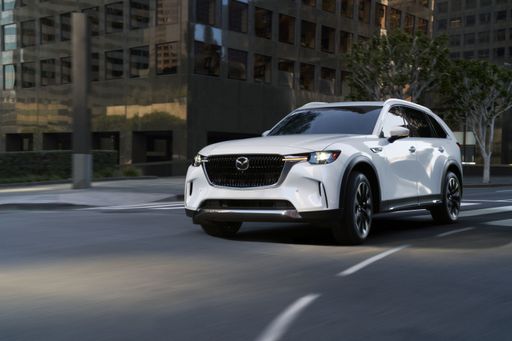
Mazda CX-90
Hyundai Santa Cruz
Mazda CX-90
Costs and Consumption
View detailed analysis
View detailed analysis
Engine and Performance
View detailed analysis
View detailed analysis
Dimensions and Body
View detailed analysis
View detailed analysis
General
View detailed analysis
View detailed analysis
Hyundai Santa Cruz
The Hyundai Santa Cruz is a city-friendly pickup with SUV manners, serving up a smooth ride and a surprisingly upscale cabin while still handling weekend projects without the drama. It doesn’t try to out-macho the big rigs; instead it wins with smart packaging, easy parking, and just enough adventure vibe to make every grocery run feel like a mini road trip.
details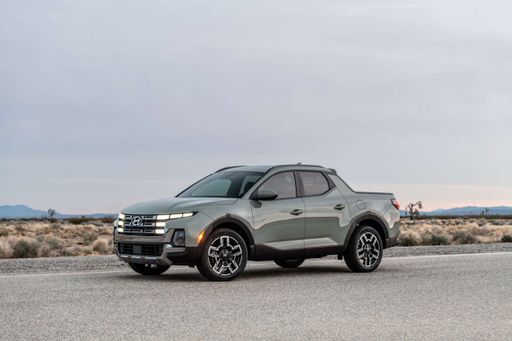
Mazda CX-90
The Mazda CX-90 brings sports-sedan swagger to the family SUV crowd, pairing a poised chassis with a hushed, upscale cabin that feels genuinely premium. It’s roomy, refined, and surprisingly fun to steer, making it a savvy alternative to the usual luxury suspects—just know the ride leans firm in exchange for that grin-inducing composure.
details
Hyundai Santa Cruz
Mazda CX-90
Costs and Consumption |
|
|---|---|
|
Price
28,800 - 42,800 $
|
Price
37,800 - 56,500 $
|
|
FuelEconomy City
18 - 22 mpg
|
FuelEconomy City
23 - 24 mpg
|
|
FuelEconomy Hwy
26 - 30 MPG
|
FuelEconomy Hwy
28 MPG
|
|
Electric Range
-
|
Electric Range
-
|
|
Battery Capacity
-
|
Battery Capacity
-
|
|
Fuel tank capacity
17.7 gal
|
Fuel tank capacity
18.5 - 19.6 gal
|
Dimensions and Body |
|
|---|---|
|
Body Type
Pickup
|
Body Type
i-ACTIV AWD Sport Utility
|
|
Seats
5
|
Seats
6 - 8
|
|
Doors
-
|
Doors
-
|
|
Curb weight
3,779 - 4,295 lbs
|
Curb weight
4,735 - 4,901 lbs
|
|
Trunk Volume
-
|
Trunk Volume
-
|
|
Length
195.9 in.
|
Length
201.6 in.
|
|
Width
75 in.
|
Width
77.6 in.
|
|
Height
66 in.
|
Height
68 in.
|
Engine and Performance |
|
|---|---|
|
Engine Type
Gasoline
|
Engine Type
|
|
Transmission
Automatic
|
Transmission
Automatic
|
|
Drive Type
Front Wheel, All Wheel
|
Drive Type
All Wheel
|
|
Power HP
191 - 281 HP
|
Power HP
280 - 340 HP
|
|
Torque
181 - 311 lb-ft
|
Torque
332 - 369 lb-ft
|
|
Number of Cylinders
-
|
Number of Cylinders
-
|
|
Engine Displacement
2.5 L
|
Engine Displacement
3.3 L
|
|
Gears
-
|
Gears
-
|
General |
|
|---|---|
|
Model Year
2,025
|
Model Year
2,025
|
|
Brand
Hyundai
|
Brand
Mazda
|
DriveDuel uses data analysis and artificial intelligence to evaluate vehicle data and create content. Content is regularly reviewed and improved.
Prices shown are manufacturer suggested retail prices (MSRP). Taxes, registration fees and dealer charges are not included.